John Dewey
Progressive Education & Curriculum Theory
John Dewey (October 20, 1859 – June 1, 1952) was an American philosopher, psychologist, and educational reformer whose ideas fundamentally reshaped modern curriculum theory by pioneering the Progressive Education movement. Born in Vermont and educated at Johns Hopkins University, Dewey spent his career at prominent institutions including the University of Michigan, the University of Chicago, and Columbia University. At Chicago, he founded the University of Chicago Laboratory Schools, using the practical school environment as a testing ground for his developmental and educational frameworks. Throughout his career, he focused on dismantling the rigid, passive, and memory-heavy schooling models of the nineteenth century in favor of a dynamic approach that positioned schools as vital agents of social change.
Core Philosophical Framework
Dewey’s core curriculum theory centers on resolving the traditional conflict between the child and the curriculum. He argued that instead of viewing structured academic subjects and a child’s natural interests as opposing forces, educators must see them as two sides of the same coin. He advocated for an experiential, continuous cycle of action and reflection where students learn by tackling real-world problems, forming hypotheses, testing them, and evaluating the outcomes. Furthermore, Dewey rejected the idea that school is simply a place to prepare for future employment. He believed that school is a form of present community life and that the curriculum must operate as a democratic microcosm where students learn civic cooperation and critical inquiry by living it every day.
Historical Context and Contemporary Legacy
Historically, Dewey’s ideas served as a powerful counterweight to the early twentieth-century movement of "Scientific Curriculum-Making" led by figures like Franklin Bobbitt, who sought to design curricula based on corporate efficiency and factory-style standardization. While administrative models like the Tyler Rationale dominated school bureaucracies, Dewey's progressive philosophy reshaped classroom environments by championing student-centered, active, and flexible models. Today, his legacy remains highly influential, serving as the direct philosophical ancestor to Project-Based Learning, constructivist teaching models, task-based communicative language learning, and contemporary democratic citizenship education. His major written works, including The School and Society (1899), The Child and the Curriculum (1902), How We Think (1910), Democracy and Education (1916), and Experience and Education (1938), trace his lifelong defense of active instruction against both traditional authoritarianism and unstructured progressivism.
Review of "My Pedagogic Creed" (1897)
In his foundational 1897 text, My Pedagogic Creed, which is featured in The Curriculum Studies Reader, Dewey synthesizes his early educational manifesto into five clear articles. He defines education as a dual process driven by both psychological factors (the child’s native instincts and interests) and social factors (the community context where those instincts are applied). He argues that the school must grow naturally out of home and community life, and that traditional academic disciplines should not be taught as isolated, abstract subjects early on. Instead, he asserts that the true center of the curriculum is the child's own social activities, which gradually unfold into deeper scientific, historical, and literary studies. Ultimately, the text frames method as following the natural development of the child's active communication and construction, identifying democratic education as the premier tool for institutional and social reform.
Impact on Curriculum Studies
This text relates directly to curriculum studies by anchoring the historical break from mechanical recitation and rigid, subject-centered designs. Philosophically, it acts as a pure application of Pragmatism, rejecting the classic mind-body split by treating human thought as an active, embodied tool meant for environmental adaptation. Theoretically, My Pedagogic Creed established the very foundation of progressive curriculum theory, providing an enduring argument against the reduction of teaching to standardized tasks, and cementing the idea that a growth-oriented, integrated curriculum is essential to sustaining a free and democratic society.
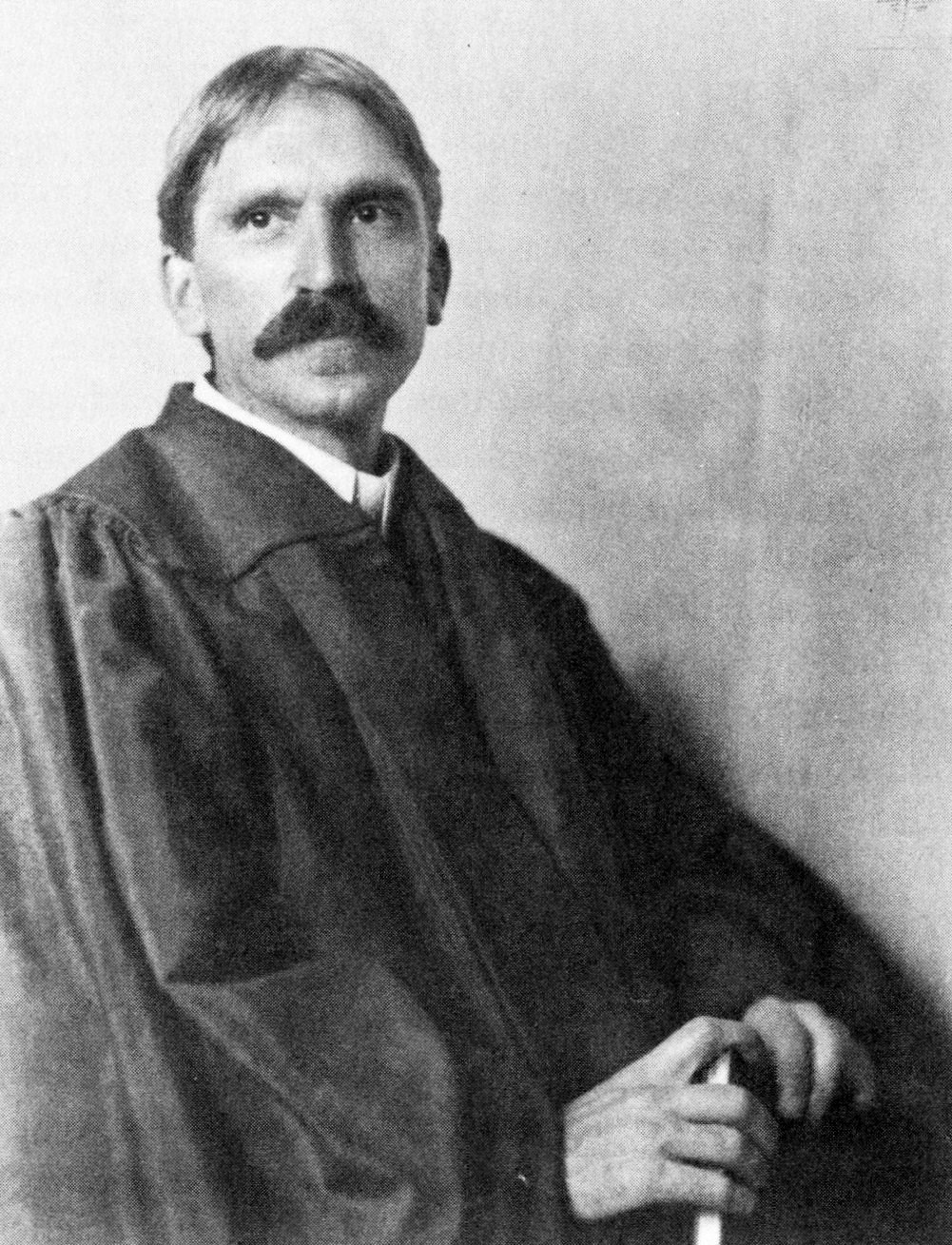
| Born | October 20, 1859 Burlington, Vermont, U.S. |
|---|---|
| Died | June 1, 1952 (aged 92) New York City, New York, U.S. |
| Era | 20th-century philosophy |
| Region | Western philosophy |
| School | Pragmatism, Instrumentalism |
| Main interests | Philosophy of education, epistemology, ethics, logic |
References
- Bobbitt, F. (1918). The curriculum. Houghton Mifflin.
- Dewey, J. (1897). My pedagogic creed. The School Journal, 54(3), 77–80.
- Dewey, J. (1916). Democracy and education: An introduction to the philosophy of education. Macmillan.
- Flinders, D. J., & Thornton, S. J. (Eds.). (2017). The curriculum studies reader (5th ed.). Routledge.
- Kliebard, H. M. (2004). The struggle for the American curriculum, 1893–1958 (3rd ed.). RoutledgeFalmer.
Comments
Post a Comment